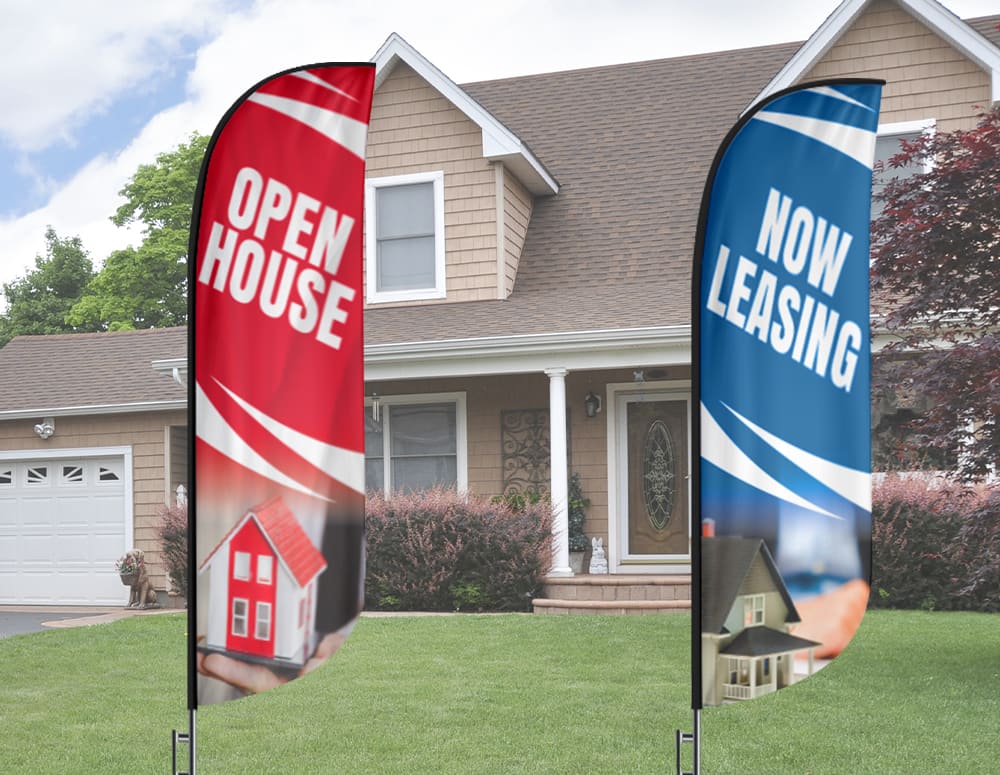
Multichannel order management ERP in practice: when the load of Amazon and website orders became too heavy to handle by hand, Feather Flag Nation moved to Arden ERP, our EZIERP white-labelled under their own name. Orders from Amazon, WooCommerce, eBay and Walmart land in one queue, FedEx, UPS and USPS labels are printed from the same screen, and the books follow every shipment.
Amazon order managementWooCommerce ERPMultichannel order syncFedEx · UPS · USPS labelsWhite-label ERP
Feather Flag Nation (featherflagnation.com), a family-owned US maker and online seller
Products
Custom feather flags, banners, garden flags and inflatable tube men
Sales channels
Amazon, the WooCommerce website, eBay and Walmart
Carriers
FedEx, UPS and USPS
Solution
Arden ERP: EZIERP white-labelled, with a multichannel order syncer
Delivered by
Eziline Software House, Islamabad
The challenge
Too many orders, in too many places, for one team to keep straight.
Feather Flag Nation sells flags, banners and inflatables made and shipped from its own US facility. Its customers arrive through Amazon, through its WooCommerce website and through other marketplaces, and every order ends the same way: a box, a label and a tracking number.
A heavy Amazon load
The volume of Amazon sales orders, on top of the website, was more than the team could manage effectively by hand. Retyping orders and checking marketplace screens is where mistakes and late shipments start, and every missed ship-by date can cost a marketplace seller its standing.
Listings that are not stock items
A kit sold as one listing is really a flag, a pole set and a base. The system has to translate every marketplace SKU into the real items to pick, pack and count, including bundles and quantity multiples, without anyone doing the arithmetic at the packing bench.
Three carriers, three portals
The cheapest service changes with weight, box and destination. Rating, labelling and tracking separately in FedEx, UPS and USPS tools costs time on every parcel, and the shipping cost still has to reach the accounts. A multichannel order management system has to bring all three into one place.
One connected network
Every channel in, every carrier out, one ERP in the middle.
Arden ERP sits between the places customers buy and the carriers that deliver. Channels are connected once per business, each with its own switch for syncing, and carriers are configured with their own accounts, so one order record travels from the marketplace to the doorstep. Amazon and WooCommerce are the two heavy channels; eBay and Walmart use the same sales-order queue, the same SKU map and the same shipping desk.
Sales channels
Amazon · WooCommerce site · eBay · Walmart
Carriers
FedEx · UPS · USPS
What Arden ERP covers
From the marketplace order to the carrier label and the ledger.
Arden ERP is our EZIERP platform, extended for multichannel selling. Each module below was read from the working system, not from a brochure.
Channel connections and order import
Amazon (Selling Partner API), the WooCommerce store (REST), eBay and Walmart are added as sales channels with sandbox or production mode and a stock location. Orders arrive on demand or on a schedule, already imported orders are skipped, and each channel can be switched off without touching the others.
Amazon SP-APIWooCommerceeBayWalmart
SKU mapping and bundles
One marketplace SKU maps to one or many stock items, each with a quantity multiplier, so a two-pack or a flag-and-pole kit deducts the right items. A list of unmapped SKUs shows what still needs a link, and order lines can be amended after import.
SKU mapBundlesUnmapped listAmend lines
Inventory and product sync
Products, categories and stock quantities are pushed to the WooCommerce store with a sync log, and Amazon inventory summaries can be read back. Opening stock import, adjustments and stock transfers keep one count behind every channel.
Stock pushSync logAdjustmentsTransfers
Fulfilment queue and ready to ship
Open orders are bucketed into late, due today, due tomorrow and later against a ship-by time set from a business-wide service level, with the reasons an order cannot ship yet. A ready-to-ship screen lists what can be labelled now, with or without a label.
Ship-by timersService levelReady to ship
Auto-pack and box rules
Box rules match product combinations, quantities and categories, and fall back to the dimensions used for earlier orders with the same mix. Frequently used boxes can be pinned per user, and box weight and shipping cost show on the packing card.
Box rulesPinned boxesWeights
Carrier rate shopping
One click fetches live rates from UPS, USPS and FedEx for the parcel and destination, sorted by price or by speed, with the cheapest service flagged. Choosing a rate applies the carrier and service to the shipment.
UPSUSPSFedExLowest rate
Labels, tracking and voids
FedEx and UPS labels, including multi-piece shipments, and USPS postage through Stamps.com are generated from the order. Addresses can be validated, tracking numbers are saved and refreshed from the carriers until delivery, and a voided label reverses its cost.
FedExUPSUSPSTracking
End-of-day manifests and shipping reports
Carrier end-of-day reports and printable manifests for USPS, UPS and FedEx close each shipping day. Shipping history, productivity and financial shipping reports show what went out, how the shipping desk is performing and what it cost.
EOD manifestsShipping historyProductivity
Accounting and finance
Sales orders become invoices with recorded payments, expenses are tracked, and the accounting module adds a chart of accounts, journals, bank statement import, reconciliation, budgets, statements and year-end close. A daily check confirms the ledgers are complete and balanced.
Chart of accountsReconciliationStatementsLedger check
Returns, credits and cancellations
Returns carry configurable deductions and can issue credit memos that apply to later invoices. A cancellation guard refuses to cancel an order while a live label or an invoice still exists.
ReturnsCredit memosCancel guard
Purchasing and demand forecasting
Requisitions, purchase orders and purchase returns manage suppliers, with a supplier portal for their own ledgers. A demand forecast weighs recent sales and seasonality to say what to reorder and when, and a packing forecast does the same for boxes and materials.
Purchase ordersSupplier portalForecast
Customer portal, roles and AI assistant
A WooCommerce plugin shows each logged-in customer their own invoices, orders and statement from the ERP, read-only and with short-lived tokens. Roles control who can ship, sell or see accounts, and an AI assistant answers questions about the data.
Customer portalRolesAI assistant
The order lifecycle
From marketplace click to delivered parcel, on one record.
Follow a single order through Arden ERP. Each step feeds the next, and the last one updates the books.
Import
The order arrives from Amazon, WooCommerce, eBay or Walmart as a sales order.
Map
Marketplace SKUs resolve to stock items, bundles and quantities.
Prioritise
The fulfilment queue ranks it against its ship-by time.
Pack and rate
A box is suggested and live FedEx, UPS and USPS rates are compared.
Label and track
The label is printed and the tracking number refreshed until delivery.
Close and book
Shipped and paid orders close automatically and the accounts update.
The syncer at work
Orders in from the channels, labels out to the carriers.
The animation traces the path of a parcel through the system: channels feed the order queue, the ERP maps, packs and rate-shops, then hands a label to the chosen carrier and takes tracking back. Watch the stages light up in turn as the order moves down the card.
Illustration of the order flow. Layout only: no real orders, volumes or carrier data are shown.
The client
The products behind the orders.
Feather Flag Nation describes itself as a family-owned business founded in 1999, designing, printing and shipping feather flags, banners and inflatable tube men from its US facility. These are the products Arden ERP turns into orders, parcels and invoices.
Most stock flags ship the same business dayPhoto: Feather Flag NationCustom inflatable tube menPhoto: Feather Flag NationSmall banner flags for property and retailPhoto: Feather Flag NationRoll-up banners and other print productsPhoto: Feather Flag Nation
What changed
One system the whole order desk works in.
One queue for every channel
Amazon, WooCommerce, eBay and Walmart orders sit in the same sales order list, ranked by when they must ship, so the team always knows which parcel to pack next.
Labels without leaving the order
Box, rates, label and tracking for FedEx, UPS and USPS are handled on the shipment screen, with an end-of-day manifest for each carrier.
Books that follow the parcels
Shipping costs, invoices, payments and returns post to the same ledgers as the orders, which gives the owners Amazon seller accounting that matches what actually shipped.
An ERP under their own name
Staff sign in to Arden ERP under the client's own name, and a portal plugin lets WooCommerce customers see their own invoices.
In plain words
Multichannel order management ERP for Amazon, WooCommerce and eBay sellers
Selling on Amazon and on your own WooCommerce website is two businesses until something joins them. Each channel has its own order screen, its own SKUs and its own idea of stock, while the warehouse has one shelf and one shipping bench. An ecommerce ERP puts one order record in the middle: marketplace orders are imported, SKUs are mapped to real stock items and bundles, shipping is rated and labelled, and the sale flows into the accounts without being typed again. That is what Arden ERP does for Feather Flag Nation, and the same design suits any business selling the same stock through several marketplaces and its own website.
The shipping side is where time is saved or lost. Comparing FedEx, UPS and USPS rates, printing the label, saving the tracking number and closing the day with a carrier manifest should be part of the same screen as the order. Arden ERP does this for a US seller, with FedEx, UPS and USPS working side by side, while the accounts, invoices, payments, returns and credit memos stay in one system, which also gives an Amazon seller accounting that matches what actually shipped.
Eziline Software House in Islamabad, Pakistan, builds this kind of software for sellers abroad as well as for businesses at home. We take our EZIERP platform, connect it to your marketplaces and carriers, white-label it with your own name and login, and support it after go-live. If you sell on Amazon, WooCommerce or eBay and are outgrowing spreadsheets and portals, we can show you the closest running system, then scope your channels, carriers, boxes and reports.
Amazon order management softwareWooCommerce ERPMultichannel inventory and order synceBay Amazon WooCommerce integrationShipping label software FedEx UPS USPSWhite-label ERPEcommerce ERP for US sellersAmazon seller accountingAmazon SP-API order syncShipping rate comparison softwareMarketplace SKU mappingOrder fulfilment queue softwareERP software PakistanERP development company Islamabad
Questions
Feather Flag Nation (Arden ERP): frequently asked questions.
What is a multichannel order management ERP?
It is one system that imports orders from every sales channel, maps their SKUs to your stock, manages fulfilment and shipping, and posts the sale to your accounts. Arden ERP does this for Amazon, WooCommerce, eBay and Walmart orders, and it is built on our EZIERP platform rather than a rented marketplace add-on.
Can an ERP sync Amazon and WooCommerce orders automatically?
Yes. Amazon orders are pulled through the Selling Partner API and WooCommerce orders through its REST API and webhooks. Each channel has its own sync switch, orders already imported are skipped, and a sync can run on demand or on a schedule. Amazon calls are signed and retried with a back-off when the marketplace rate-limits them.
How does Arden ERP handle Amazon bundles and kits?
Each Amazon SKU is mapped to one or more stock items with a quantity multiplier, so a kit or a two-pack deducts the right items. An unmapped-items list shows SKUs that still need a link, so nothing is silently dropped from an order.
Does it print FedEx, UPS and USPS labels?
Yes. FedEx and UPS labels, including multi-piece shipments, and USPS postage through Stamps.com are created from the order. Tracking numbers are saved and refreshed from the carriers, and a voided label reverses its cost.
Can it compare shipping rates between carriers?
Yes. One click fetches live UPS, USPS and FedEx rates for the parcel and destination, sorted by price or speed, and the chosen service is applied to the shipment.
What does white-label ERP mean here?
The system carries the client's own name. Feather Flag Nation's team signs in to Arden ERP, which is our EZIERP platform under their brand, with a branded login and a customer portal inside their WooCommerce account area.
Does it also handle accounting for an Amazon seller?
Yes. Orders become invoices with recorded payments, and the accounting module adds a chart of accounts, journals, bank import, reconciliation and statements, so the books reflect what shipped and what was paid.
Can Eziline build something similar for my business?
Yes. We connect EZIERP to your channels and carriers, configure it to your products and workflow, and support it after go-live. Book a free consultation and we will scope your version.
Your turn
Need a system like this for your organisation?
Tell us how your teams work today. We will show you the closest running system, then scope and quote yours with your workflows, roles and reports.